
By Malcolm Bricknell (MECS) and Isabel Risby (GeCCo)
Introduction
Around the world, environmental degradation is accelerating [i]. Existing financial mechanisms and conservation models have been unable to prevent the alarming losses of habitat and biodiversity. Yet within this bleak landscape, some interesting developments are emerging where the support of enlightened donors for Nature Based Solutions (NbS) has been facilitated by innovative financing mechanisms. These solutions link the provision of grant finance through results-based instruments to conservation and restoration schemes that can protect and, in some cases, restore habitats. One very interesting opportunity to enhance conservation projects, arises from the opportunity to integrate Modern Energy Cooking (MEC) solutions (especially electric cooking) into these schemes. In this blog, we examine how these opportunities can arise.
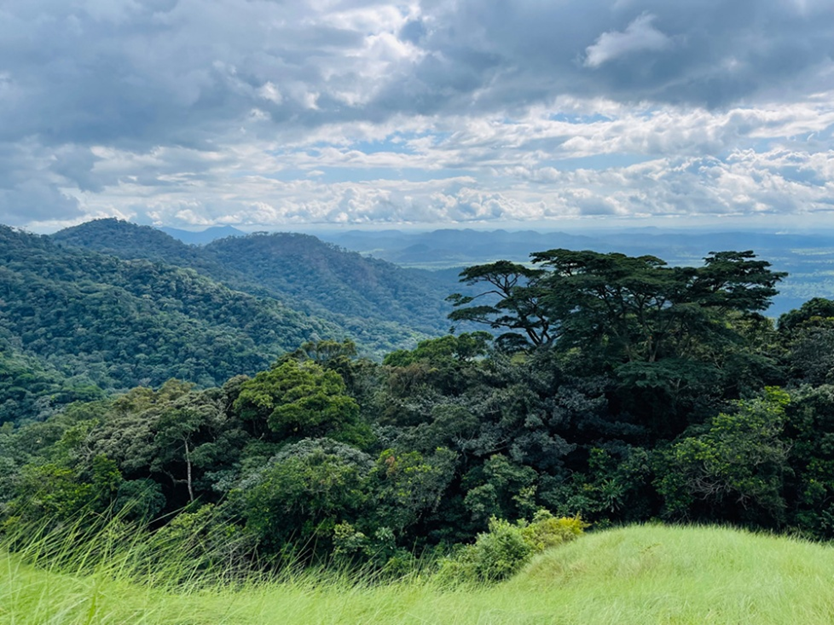
Figure 1” The Mount Nimba Strict Nature Reserve, a UNESCO World Heritage site in West Africa, harbors a unique population of western chimpanzees.” Source: Mongabay, Image by Kathelijne Koops[ii]
Nature‑based solutions (NbS) (UN Environment Programme, 2021) use the protection, management, and restoration of ecosystems to address climate and biodiversity challenges[iii]. Such schemes are increasingly attracting international finance through innovative mechanisms which align investment with nature protection. This is especially true in the case of biodiversity credits, where methodologies and standards are now evolving whereby well-structured projects with certified biodiversity outcomes can claim nature credits which can then be traded or sold to companies, institutions, or individuals seeking to fund these kinds of credible, measurable environmental results. Biodiversity credits show how finance can reward verified ecological outcomes.
Biodiversity credits are evolving in a rather similar way to carbon credits to support conservation projects. The 2022 Kunming-Montreal Global Biodiversity Framework set out a plan to halt and reverse the loss of biodiversity by 2050 including aims to increase the level of finance available for biodiversity conservation and restoration. Within this context, biodiversity credits are emerging as a financial instrument designed to direct private capital toward nature‑positive actions[iv].
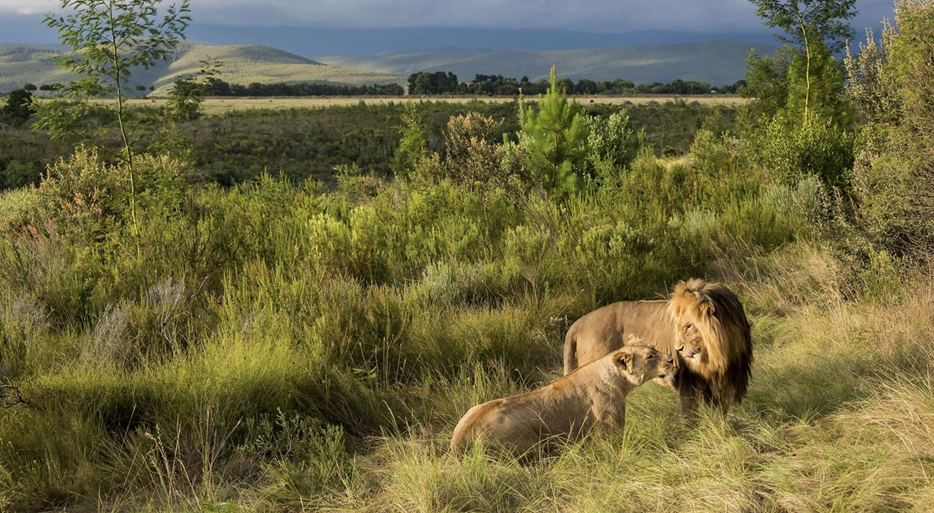
Figure 2: “Male lion and lioness caring for each other; South Africa” Credit: Clifford Rosenberg /TNC Photo Contest 2019, Source: Nature Conservancy[v]
Modern Energy Cooking (MEC) interventions, particularly electric cooking, can reduce pressure on forests and ecosystems, facilitating the conservation outcomes that NbS aim to deliver. Evidence from the Clean Cooking Alliance reinforces this as they highlight how clean cooking interventions can significantly reduce pressures on critical habitats. For example, efficient stove programmes in China’s Sichuan province have cut fuelwood use by 50% and reduced deforestation in key panda habitats saving approximately 624 hectares of forest each year and avoiding 45,000 tCO2 e annually[vi].
Madagascar offers additional evidence of how MEC interventions can facilitate conservation outcomes. With its exceptional levels of endemism – around 95% of reptiles, 89% of plant species, and 92% of mammals found nowhere else on Earth[vii] – its biodiversity is acutely vulnerable to forest degradation. As explored in the GeCCo blog “How eCooking can Preserve Madagascar’s Unique Biodiversity,” [viii] MEC interventions, especially eCooking, lower demand for fuelwood and other biomass fuels, reducing pressure on forests and supporting the conservation outcomes central to NbS, while also enhancing the resilience and wellbeing of last‑mile communities in biodiversity‑rich regions.
This last point is important since MEC projects also achieve a wide range of important co benefits spanning such impacts as health improvements, gender impacts (eg reduced time spent on collecting fuel and tending fires), climate benefits (from emission reductions) and livelihood improvements. So, integrating MEC into conservation projects can strengthen the impacts arising from these projects as well as playing a direct role in habitat preservation. MEC involvement can therefore reinforce the case to implement these solutions.
At the present time, MEC projects are able to attract donor funding from carbon credits in either the voluntary or compliance markets. In practice the pricing that project developers can attract depends on a range of factors including the credibility of the emission reduction calculations and equitable revenue sharing arrangements. Recent trends in dMRV are helping to promote good solutions in these areas. However, a further important factor affecting pricing is the extent of additional SDG impacts involved in a project alongside its carbon emission reductions. Consequently, projects able to demonstrate strong “co-benefits” are able to attract significant pricing premiums and as a result there is an obvious motivation for project developers to seek to take advantage of this.
In response to the growing interest in biodiversity and other NbS, leading carbon credit standards like Gold Standard and VERRA are developing methodologies for measuring and certifying biodiversity claims. In this way, project developers will be incentivised to identify and support biodiversity solutions to justify higher pricing for their carbon credits. At the same time, investors can gain the benefit of the due diligence and safeguards required under carbon crediting mechanisms, especially where high integrity methodologies like the Gold Standard MMMECD[ix] are used.
Modern Energy Cooking (MEC) projects, including eCooking, have a good track record of attracting carbon credit revenues. The switch from cooking on biomass (e.g. wood or charcoal) to electric cooking can achieve significant CO2 reductions. At the same time the non-climate SDG impacts mentioned previously (Health, Gender, Livelihood etc) are also well recognised. So, linking biodiversity into this well-established platform offers the potential to create new opportunities to promote biodiversity.
Nevertheless, there are complications. Carbon credits in essence only need to measure one component, whereas measuring biodiversity is much more complex. Encouragingly, multiple standards have been developed and different solutions to the complex issues involved are emerging. Two important initiatives (the Biodiversity Credit Alliance (BCA) and the International Advisory Panel for Biodiversity Credits (IAPB) are now seeking to bring harmonisation into the market at the same time as promoting good practices.
Principles of biodiversity footprinting are currently under development, but already some corporates are investing in biodiversity projects to demonstrate their commitment to supporting conservation initiatives. Other donors are showing strong interest in using this mechanism to support conservation and restoration projects.
Biodiversity finance is also developing strongly outside of carbon and biodiversity credit markets. Debt‑for‑Nature Swaps, for example, convert a portion of a country’s debt into long‑term funding for nature‑positive action, with the World Economic Forum estimating they could unlock “$100 billion to restore nature and help countries adapt to climate change.”[x] Since the 1980s, around 140 swaps have been completed.
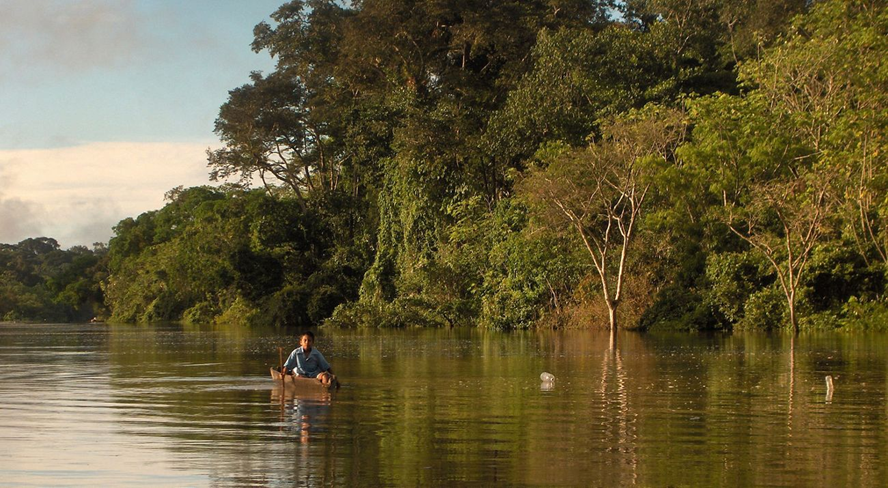
Figure 3: “Amazon in northeastern Peru. A young boy paddles his dugout canoe to school on the Yarapa River, a tributary of the Amazon in northeastern Peru” Credit: Jean-Louis Ecochard, Source: Nature Conservancy[xi]
For example, in 2002 the US and Peruvian governments — supported by WWF, Conservation International, and The Nature Conservancy signed a $14 million debt‑for‑nature swap to protect 27.5 million acres of tropical forest xii. The swap unlocked new financing for the Peruvian Amazon, which covers 60 percent of the country, and strengthened Peru’s Natural Legacy initiative (Patrimonio Natural del Perú), supporting conservation across 16 million hectares through the Project Finance for Permanence (PFP) financing approach.[xii]
The “Rhino Bond,” launched in 2022 by the Global Environment Facility (GEF) and the World Bank, is a 5‑year, $150 million investment designed to protect declining population of Black Rhinos, illustrating how biodiversity credits can also be embedded into bond finance[xiii].
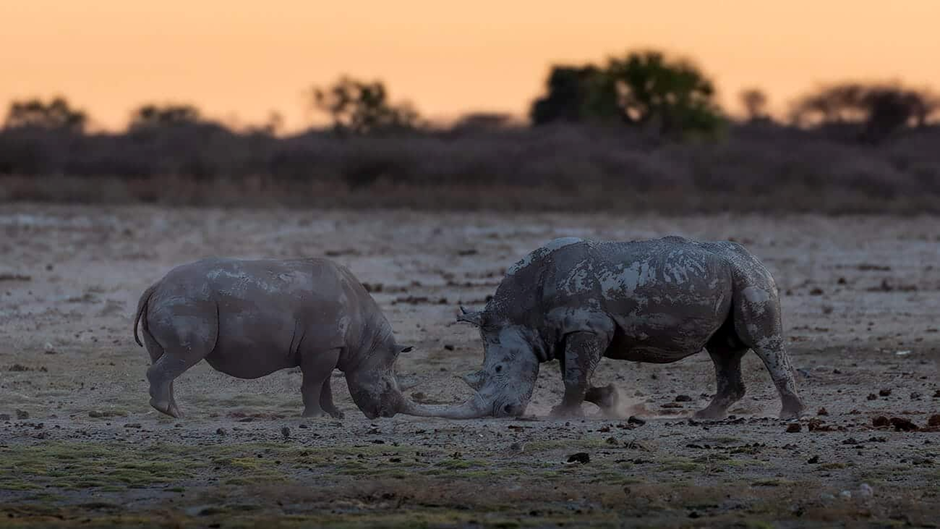
Figure 5: Image of Standoff between White and Black Rhino, Source: Working with Wildlife [xiv]
The Rhino Bond operates as an outcome‑based financing model: investor returns depend on verified rhino population growth in South Africa’s Addo Elephant National Park and the Great Fish Nature Reserve [xiii]. By reducing fuelwood extraction and easing pressure on surrounding habitats, the addition of MEC components could help stabilise ecosystems, lower human–wildlife conflict and create more favourable conditions for rhino population recovery, as well as delivering a range of additional social and economic benefits to strengthen project impacts.
Conclusion
In conclusion, innovative financing solutions are developing new mechanisms to channel funding to advance conservation outcomes. These include biodiversity impacts within carbon credit projects, projects supported through standalone biodiversity credits, Debt-for-Nature Swaps and credits embedded into bond financing.
As these mechanisms evolve, integrating complementary approaches that enhance conservation outcomes is a real opportunity to promote different objectives simultaneously. MEC solutions such as electric cooking can work alongside NbS interventions, supporting restoration efforts for nature, by preventing further destruction to habitats specifically forest, and strengthening the overall impacts of these projects.
It would be wrong to underestimate the challenges involved. Population growth and competing economic interests represent ongoing threats. Technical issues around measuring biodiversity impacts, ensuring their sustainability and linking solutions into financing instruments are complex. However, there is strong donor interest in conservation projects and the development of innovative funding instruments to channel finance into these is encouraging. Identifying good solutions, such as MEC that can support these initiatives must be a priority.
Bibliography
[i] IPBES (2019), “The global assessment report on Biodiversity and Ecosystem Services,” Available at: https://www.ipbes.net/global-assessment#:~:text=The%20IPBES%20Global%20Assessment%20on,accepted%20by%20the%20IPBES%20Plenary [Accessed 10 February 2026]
[ii] Figure 1: “The Mount Nimba Strict Nature Reserve, a UNESCO World Heritage site in West Africa, harbours a unique population of western chimpanzees.” Source: Mongabay, Credit: Kathelijne Koops , Available at: https://news.mongabay.com/2024/01/a-rush-for-green-iron-is-on-in-guinea-will-chimpanzees-be-a-casualty/ [Accessed 10 February 2026]
[iii] UN Environment Programme (2021)defines nature‑based solutions as “actions to protect, sustainably manage, and restore natural and modified ecosystems that address societal challenges effectively and adaptively, simultaneously benefiting people and nature.” Available at: https://www.unepfi.org/nature/nature/nature-based-solutions/ [Accessed 10 February 2026].
[iv] European Commission (2025), “Questions and answers on Nature Credits Roadmap”, Available at: https://ec.europa.eu/commission/presscorner/detail/da/qanda_25_1680 [Accessed 5 Jan 2026].
[v] Figure 2: “ Male lion and lioness caring for each other; South Africa” Credit: Clifford Rosenberg /TNC Photo Contest 2019, Source: Nature Conservancy (2024), Available at: https://www.nature.org/en-us/what-we-do/our-insights/perspectives/investing-nature-people-planet/ [Accessed 12 Feb 2026].
[vi] Clean Cooking Alliance (2022), “Accelerating clean cooking as a nature-based climate solution,” Available at: https://cleancooking.org/wp-content/uploads/2022/08/Accelerating-Clean-Cooking-as-a-Nature-Based-Climate-Solution.pdf [Accessed 12 Feb 2026].
[vii] WWF, “Madagascar| Animals, People, and Threats,” Available at: https://www.worldwildlife.org/places/madagascar/ [Accessed: 4 March 2026].
[viii] Risby, I. (2025) “How eCooking can Preserve Madagascar’s Unique Biodiversity” , Global Electric Cooking Coalition. Available at: https://www.gecco.org/2025/07/25/blog-post-1/ [Accessed: 4 March 2026].
[ix] Gold Standard for the Global Goals (2020) “Methodology for Metered and Measured Energy Cooking Devices” Available at: https://globalgoals.goldstandard.org/news-methodology-for-metered-measured-energy-cooking-devices/ [Accessed: 4 March 2026].
[x] Whiting, K. (2024) “Climate finance: What are debt-for-nature swaps and how can they help countries?”, World Economic Forum. Available at: https://www.weforum.org/stories/2024/04/climate-finance-debt-nature-swap/ [Accessed 7 Jan 2026].
[xi] Figure 3, Nature Conservancy (2026), “Amazon in northeastern Peru. A young boy paddles his dugout canoe to school on the Yarapa River, a tributary of the Amazon in northeastern Peru”, Credit: Jean-Louis, Ecochard, Available at: https://www.nature.org/en-us/about-us/where-we-work/latin-america/peru/peru-infrastructure/
[xii] WWF (2024) “How debt-for-nature swaps have protected the world’s tropical forests for 25 years” Available at: https://www.worldwildlife.org/news/stories/how-debt-for-nature-swaps-have-protected-the-worlds-tropical-forests-for-25-years/ [Accessed 10 Jan 2026].
[xiii] Norad (2025), “RhinoBond: How innovative finance is saving wildlife.” Available at: https://www.norad.no/en/news/news/2025/the-rhino-bond-how-innovative-finance-is-saving-wildlife-and-empowering-communities/ [Accessed 9 Jan 2026].
[xiv] Figure 5, Working with Wildlife (2024), “An Unlikely Standoff: While white and black rhinos typically avoid each other”, Credit: Working with Wildlife.Available at: https://workingwithwildlife.org/white-rhino-vs-black-rhino/ [Accessed 12 Feb 2026].