By Isabel Risby, Communications Officer, GeCCo
Summary For the estimated 1.3 billion people living with disability worldwide, cooking is rarely a simple task — and for those in low-income contexts, it can be dangerous, exhausting, and isolating. This blog explores how the transition to electric cooking , supported by global research, is offering a safer, more accessible, and more independent way to cook for persons with disabilities (PwDs).
According to the World Health Organisation, “an estimated 1.3 billion people experience significant disability. This represents 16% of the world’s population, or 1 in 6 of us” (WHO, 2023). PWDs also, according to the WHO, face many health equities, these very equities arise from unfair conditions, one being poverty (WHO, 2023).
PWDs living in poverty‑affected communities face intensified hardship in their day‑to‑day routines. Cooking is one of the practices where this exclusion becomes most visible, often involving significant physical strain, safety risks, and reliance on caregivers and family. To better understand these challenges, the Modern Energy Cooking Services (MECS) programme partnered with the Prabhat Education Foundation to explore the intersection of disability, energy access, and everyday life.
One of the resulting research projects – the report Energy, Disability and Everyday Life in Ahmedabad – highlighted a significant gap in energy equity in the context of Ahmedabad, in India. Despite high electrification rates and extensive infrastructure, the authors found that “approximately 13.1%” of the city’s population still live in low‑income or slum settlements, where informal electricity connections, limited cooking infrastructure, and high energy expenses remain common, (Ms. Silakari, P. et al, 2025).
This statistic illustrates how, even in a city like Ahmedabad – where electrification rates are high and infrastructure is extensive – those most vulnerable are still excluded through unstable and informal electricity connections. Within this context of energy poverty, everyday practices such as cooking becomes significantly more demanding. For PwDs, particularly those who are visually impaired or have limited dexterity, find these challenges to intensify: navigating open flames, handling hot cookware, and managing inconsistent power supply all heighten the risk of burns, accidents, and dependence on others.
This blog explores how the transition to electric cooking, supported by global research, is offering a safer, more accessible, and more independent way to cook for PWDs in low-income contexts. Electric cooking is a transformative solution — one that has the power to remove daily barriers and improve quality of life. In settings where cooking infrastructure is limited and electricity connections remain unstable, the introduction of modern electric appliances not only fosters greater independence for PwDs, but also unlocks wider downstream co-benefits for households and communities.
To understand what this transition means for households with PwDs in low-income contexts, we need to start with a foundational point”, Dr Amita Bhakta stated in a blog series: “Ensuring that people with disabilities have good nutrition requires us to recognise them as people who need to cook” (Dr Amita Bhakta, 2020). Dr Bhakta, who has worked alongside the Prabhat Education Foundation and played a significant role in their research, advocated that for this to be achieved, kitchens and appliances such as electric pressure cookers need to be “adapted”. Because even if you are visually impaired, have limited dexterity, or are a deaf individual, you should still be able to cook food and eat well (Dr Amita Bhakta, 2020).
This is a foundational point to the whole conversation. The ability to cook may seem obvious, but in these contexts, it is far from simple — particularly when relying on traditional cooking methods. The good news is that electric cooking offers a compelling alternative; appliance design continues to advance, and modern electric solutions are increasingly affordable and accessible in many forms.
Electric cooking devices — and electric pressure cookers (EPCs) in particular — are increasingly being designed with accessible interfaces, intuitive controls, and easy-to-use buttons from the outset. EPCs come in two main forms — mechanical and electronic — as outlined in the Pressure Cooker Selection Guide by Dr. Jon Leary and colleagues (2018). Mechanical EPCs use simple, tactile dials and switches, while electronic models feature clearly labelled control panels with raised buttons and preset programmes. These features are already meaningful for PwDs who require minimal physical interaction with an appliance — reducing the risk of burns, eliminating the need to monitor an open flame, and lowering the cognitive load of cooking for those with sensory or physical impairments.
The 2020 Global LEAP Awards EPC usability testing, implemented by CLASP in partnership with MECS, found that electronic EPCs received top marks for user experience — the VON VSCP60MMX in particular won Best User Experience for its ease of operation, with one participant noting: “The EPC is absolutely great with good functionalities that makes cooking a lot easier” (Global LEAP Awards, 2020). Mechanical options also performed strongly; the SESCOM MY-CJ6001W was praised for its simple dial interface, compactness, and capacity (Global LEAP Awards, 2020). That both interface types performed well is significant — it suggests that eCooking can cater for a range of needs and preferences, rather than requiring a one-size-fits-all solution.
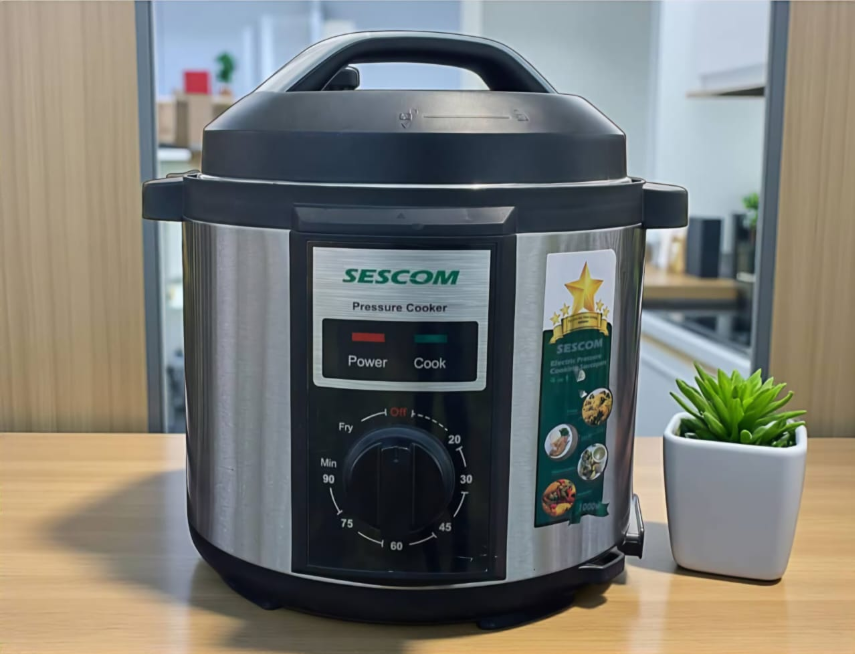
Figure 1: Image of SESCOM MY-CJ6001W Electric Pressure Cooker, Image credit: SESCOM – Affordable Electric Cooking Solutions for Every Tanzanian Household, 2026.
With the positive account for usability on our side, it’s also important to delve further into what electric cooking devices can provide for certain disabilities. For those visually impaired or with limited dexterity, devices such as the electric pressure cooker and slow cookers feature assisted timers and automated controls that allow for “set it and forget it” cooking. This means users can safely leave their food cooking while attending to other tasks.
For PwDs, this represents a fundamental shift in autonomy. Not having to remain physically present at a cooking appliance, monitor a flame, or adjust controls mid-cook removes one of the most significant daily barriers that traditional cooking imposes. This also addresses a physical barrier identified in the “Energy, Disability and Everyday Life in Ahmedabad” report, which found that “female caregivers — often mothers — shoulder disproportionate energy-related burdens, managing devices, adjusting routines, and sacrificing their own needs”(Ms. Silakari et al., 2025). Transitioning to electric cooking directly eases this burden. The automated controls reduce the need for constant supervision, freeing up time for other tasks — including those that support household income.
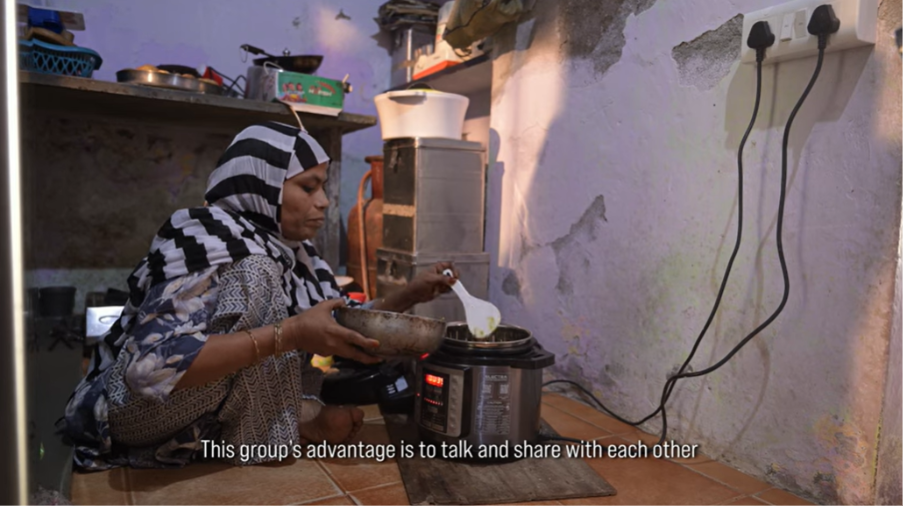
Figure 2: Image of Shaheen Parveen, research participant, preparing a meal using an electric pressure cooker (Image credit: from video by Prabhat Education Foundation, Source: MECS programme)
Energy access is another key barrier facing PwDs in low-income contexts. In areas such as Ahmedabad, power cuts are a daily occurrence — making reliable cooking a consistent challenge. In terms of appliance design and capability, electric cooking has been designed to operate under conditions of electricity instability, offering a more resilient solution for these households.
In the report “Energy, Disability and Everyday Life in Ahmedabad” it was recognised that “Power instability disrupts critical routines” (Ms. Silakari et al., 2025) When these routines are disrupted, one of the secondary impacts is caregivers having to adjust meal preparation prep. To remove this impact, Jon Leary’s report on the “Pressure Cooker Selection Guide,” offers reassurance here, noting that electric pressure cookers can help remove this burden – making it one less thing for caregivers to worry about.
The report notes how electric pressure cookers are designed to be affected by power cuts. The ‘mechanical’ EPC models “keep ticking even if there is not power” but if the “power cut is longer than 10-15 minutes, the timer will need to be increased” (Dr. Jon Leary et al ,2018). As for the ‘electronic’ EPC although it will need to be reprogrammed, “It should be noted as long as the power goes off after it has pressurised, any electric pressure cooker will keep cooking during a power cut, as they are all insulated on the sides, so the contents will likely remain above 100°C for over half an hour, especially if it is a model with an insulated lid” (Dr. Jon Leary et al,2018).
This means that even with energy insecurity, an electric pressure cooker can keep food warm for a prolonged period without spoiling dishes in progress. This unlocks real co-benefits across the household – reducing the burden on caregivers, generating household savings, and supporting wider wellbeing through improved nutrition and reduced reliance on traditional cooking methods, which are widely associated with serious health implications.
Perhaps the most transformative solution for PwDs in these contexts — particularly in last-mile and rural communities who generally don’t have access to energy — is solar-powered electric cooking, which removes the concern of power instability entirely. MECS research has already demonstrated this is a reality, with MECS partner Kachione LLC developing a $200 solar home system in Malawi that pairs directly with an electric pressure cooker (MECS programme, 2022). This work is being scaled further through the SOLCO partnership, which is targeting 250,000 households across Africa by 2027. For PwDs, the benefit is profound. A solar-powered electric pressure cooker does not reset during a power cut or require restarting mid-cook — for someone with visual impairment, limited dexterity, or hearing loss, that reliability is a prerequisite. Find out more at solcopartnership.org
Another important reason for supporting the transition of people with disabilities (PwDs) in low-income contexts to electric cookers is health and safety. PwDs are more vulnerable to the effects of indoor air pollution from traditional cooking methods due to a combination of factors, including a higher prevalence of pre-existing health conditions, reduced mobility that can increase time spent in smoke-filled environments, and socioeconomic barriers that limit access to cleaner technologies and adequate housing. As a result, they often face a heightened risk of injury, respiratory illness, and other health complications associated with traditional cooking practices.
In contrast, electric cooking appliances are powered by electricity and produce no direct emissions at the point of use, meaning they do not generate smoke or harmful fumes during cooking. This makes them particularly beneficial in reducing exposure to household air pollution. For PwDs, who may already experience greater exposure due to spending more time indoors and have increased susceptibility due to underlying health conditions, removing this source of pollution can significantly reduce compounded health risks and improve overall safety and wellbeing. To address the socioeconomic barriers to adoption, affordability schemes like PAYGO and on-bill financing are available to minimise upfront appliance costs. A landmark example is Tanzania’s On-Bill Financing Programme, which allows new customers to acquire eCooking appliances by repaying gradually through their electricity bills.
Electric cooking is the way forwards. Take induction cooktops as an example. A recent project executed by BURN manufacturing with Gamos providing Uk administration, “deployed nearly 10,000 Electric Induction Cookers (EICs) across four African countries.” (Dr Batchelor and Dr Scott, 2026). A blog written by Dr Nigel Scott and Dr Simon Batchelor explained the results, with major benefits in regard to the SDGs
The results indicated a wide range of benefits including: annual fuel cost savings of 1.2m USD/year, time saving of 1.3m hours/year, 900 fewer cooks experiencing cooking-related illness, 4,300 women benefiting from a reduction in cooking related hazards and emission reductions of 5,400 tCO2/year (Dr Batchelor and Dr Scott, 2026).
The results were spectacular, and the EIC’s themselves received high satisfaction rates, with users appreciating the ‘cleanliness’ of the appliances especially in regard to the health and emissions aspect, (Dr Batchelor and Dr Scott, 2026).
In the context of PwDs in low-income contexts, an EIC is not only an affordable device that reduces energy usage and has assistive feature, but it’s safe and brings major health benefits. To find out more about this – read the blog here: https://mecs.org.uk/blog/user-benefits-of-cooking-with-induction-cookers/ (Dr Batchelor and Dr Scott, 2026).
The “Energy, Disability and Everyday Life in Ahmedabad” report highlighted two key barriers facing households with PwDs — lack of affordability and concern over the use of hazardous alternatives, (Ms. Silakari, P. et al. (2025). The EIC device and the findings from this project directly address both. By transitioning to electric cooking or in this case to an EIC, households stand to benefit from reduced expenditure on fuel, fewer health complications from indoor air pollution, lower risk of burns and fires, time savings that can be redirected toward education or income-generating work, and an eased caregiving burden for families previously managing hazardous cooking methods.
It is also worth noting that reduced health complications from transitioning to electric cooking, can ease pressure on national health services – freeing up government resources to prioritise other critical areas, including expanding energy access in low-income communities. A compelling ripple effect that extends well beyond the household.
Whilst this blog has highlighted some major avenues for the benefits of transitioning to electric cooking for PwDs in low-income contexts, there is a wide body of global research supporting further evidence on this topic. The purpose of this blog is simple – to push the message for electric cooking adoption and transition across these very communities. The benefits and improvements these appliances bring to daily life for PwDs in low-income contexts are immense and should not be ignored.
Electric cooking is in the here and now, and we must take the opportunity to leverage it — making sure no one is left behind in the transition to modern energy cooking.
References
Dr Amita Bhakta (2020) ‘Ensuring every body can cook: including people with disabilities in MECS – Modern Energy Cooking Services’, Leave No One Behind: Blog Series, 17 December. Available at: https://mecs.org.uk/blog/ensuring-every-body-can-cook-including-people-with-disabilities-in-mecs/ (Accessed: 11 May 2026).
Dr Batchelor, S. and Dr Scott, N. (2026) ‘User Benefits of Cooking with Induction Cookers – Modern Energy Cooking Services’, Modern Energy Cooking Services, 21 January. Available at: https://mecs.org.uk/blog/user-benefits-of-cooking-with-induction-cookers/ (Accessed: 12 May 2026).
Dr Leary, J. et al. (2018) Electric Pressure Cooker Selection Guide. Gamos LTD. Available at: https://mecs.org.uk/wp-content/uploads/2020/12/Pressure-cooker-selection-guide-v1.2-8-3-18.pdf (Accessed: 11 May 2026).
Global Leap Awards (2020) Electric Pressure Cooker Usability Testing Buyers Guide. Available at: https://mecs.org.uk/global-leap-awards-announces-results-from-electric-pressure-cooker-usability-testing/.
MECS programme (2022) An Off-grid Solar Photovoltaic Electric Pressure Cooker system that costs only $200 in Malawi – Modern Energy Cooking Services, Modern Energy Cooking Services. Available at: https://mecs.org.uk/blog/an-off-grid-solar-photovoltaic-electric-pressure-cooker-system-that-costs-only-200-in-malawi/ (Accessed: 12 May 2026).
Ms. Silakari, P. et al. (2025) Energy, Disability, and Everyday-Life in Ahmedabad | MECS report. Ahmedabad, Gujarat, India: Prabhat Education Foundation.
World Health Organisation (WHO) (2023) Disability, Who.int. World Health Organization: WHO. Available at: https://www.who.int/news-room/fact-sheets/detail/disability-and-health (Accessed: 11 May 2026).