Background:
Gorillas are some of the rarest species on earth and are some of our closest ancestors sharing 98% of our DNA (1). However, even with this closeness humans have been detrimental to their populations, inflicting violence, hunting, habitat destruction and disease – the WWF stated threats were so severe that it was once thought the species of the mountain gorilla would become extinct by the end of the twentieth century (2).
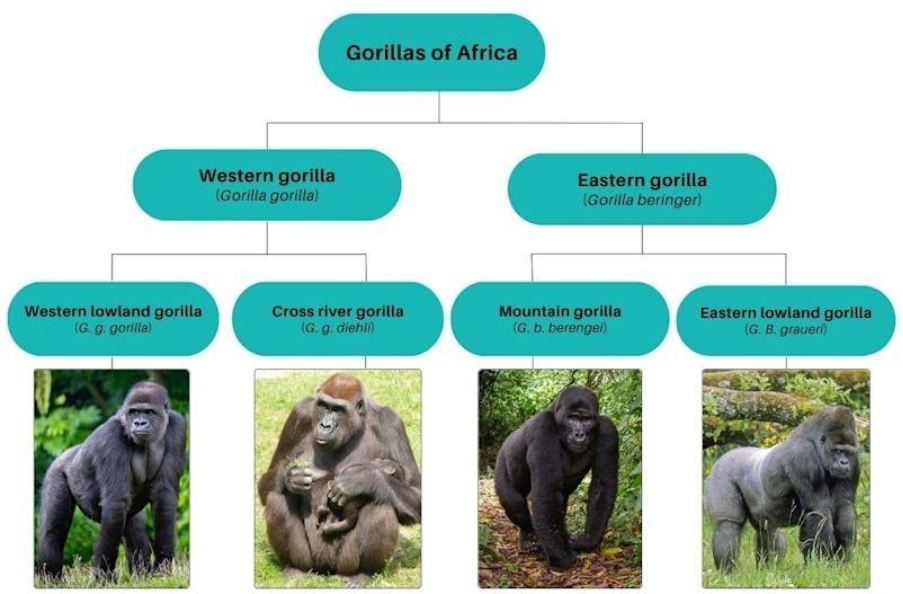
Figure 1: Diagram of the gorilla Species, Credit: Paul Kelly, 2025, Follow Alice LTD
Gorillas’ endangerment has largely resulted from human-driven activities. One such impact stems from traditional cooking methods: the collection of firewood and production of charcoal for cooking fuel have caused major threats to the forest’s gorillas reside in. These practices have led to deforestation and habitat loss, increasing human-wildlife conflict and exposing gorillas to human settlements—factors that threaten their health and survival.
The Problem: Traditional Cooking Methods and Deforestation
As a contributing writer to the Earth Organisation notes, the decline in gorilla populations is closely linked to human activities that disrupt their habitats and threaten their survival. One of the foremost contributors to their decline, as Levy, A. 2025 puts it, has been habitat destruction due to a series of destructive practices: deforestation, mining activities, and agricultural expansion (4).
Leading on from this deforestation stems largely from traditional cooking methods as Wisdom Akpalu, et,al states – “Overreliance on biomass energy, such as firewood and charcoal, for cooking in developing countries has contributed to high rates of deforestation”(5). Posing huge risk to gorilla populations, especially as human populations grow and land clearance intensifies, demand is bound to increase.
“With an estimated figure of over 15 million hectares of tropical forest cleared annually to support small-scale agriculture and provide fuelwood for heating and cooking”(6), gorilla habitats are increasingly fragmented and degraded. Unless unsustainable practices like traditional cooking methods are addressed, this issue will persist further endangering gorillas and other forest-dependent species.
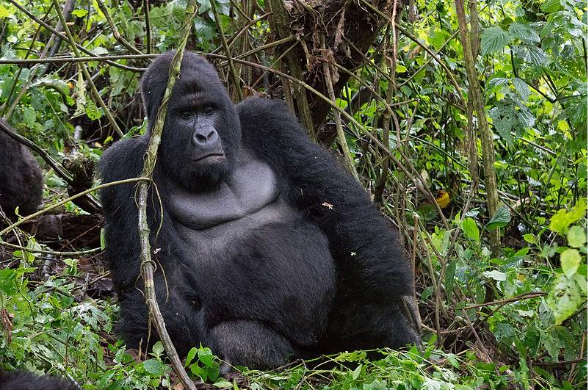
To stress this further, according to the WWF “Inside gorilla habitat in Virunga National Park, people harvest charcoal for use as a fuel source in cooking and heating” (7). This charcoal production—an illegal, multi-million-dollar industry—has destroyed gorilla habitat .
Charcoal is in such high demand that even in the most protected areas the illegal charcoal trade still occurs. In countries like the Democratic Republic of Congo (DRC), 90% of the population relies on charcoal as their primary energy source (8) —a staggering figure that highlights the root of the energy access challenge. This, therefore, solidifies why even the most protected of areas such as Virunga, struggle with keeping illegal activity at bay. The overwhelming demand for charcoal places immense pressure on forest resources, making enforcement incredibly challenging – therefore threatening gorillas.
On an optimistic note, however, energy access gaps are being addressed. Initiatives like Mission 300—which aims to deliver electricity to 300 million Africans—are tackling the shift from traditional energy fuels to reliable, stable electricity.
The Democratic Republic of Congo (DRC) has been selected as a Phase 1 country for Mission 300 – Their Energy Compact is linked here (9) meaning DRC will be a prioritised region for widespread energy access. By expanding electrification, the initiative aims to address the energy access gap and in turn, helps to reduce dependence on charcoal, safeguarding the countries forests and wildlife.
Additionally, embedding electric cooking within M300 energy compacts is crucial. This is because as well as providing countries with electricity, the uptake of clean, efficient electric cookstoves is significant in safeguarding human health but also protecting surrounding ecosystems and wildlife.
“For Virunga in particular, illegal charcoal production has been a big cause of forest loss – as well as leading to the deaths of gorillas” (10). As forests are destroyed, wildlife lose their habitat — a dual threat that underscores the urgency of embedding energy access and electric cooking into national strategies.
From this, it is evident that traditional cooking methods are a key driver of destruction to the natural environment and people’s health. With approximately 600 million people in Sub-Saharan Africa without access to electricity, the consequences are intensifying.
The reliance on firewood and charcoal as cooking fuels, exposes gorillas to a range of threats including: human-wildlife conflict, disease exposure (which their immune systems cannot tolerate), habitat loss, and as Levy, (2025) evidences it can also cause disruption to gorillas natural cycles, disrupting their foraging grounds and in turn, fragmenting their communities furthering the challenge for gorilla groups to find adequate food and maintain healthy social structures (4).
As gorillas are found exclusively in forests of equatorial Africa (11), it’s critical that energy access gaps are addressed but also electric cooking emerges as an alternative to traditional cooking practices, for not just the benefit of people’s livelihoods but also the vitality of the species who reside there.
Present-day mechanisms that are conserving gorillas?
It’s crucial that there are present-day mechanisms in place to conserve gorilla species.
Protective acts such as the: Agreement on the Conservation of Gorillas and their Habitats, a Multilateral Environmental Agreement covering all ten gorilla Range States, is a vital mechanism in solidifying conservation efforts and protection of gorillas. This agreement covers all gorilla species in all ten range states, with currently 7 countries having become a contracting party to the agreement – the agreement establishes key indicators to address conservation and protection of gorilla species through action plans.
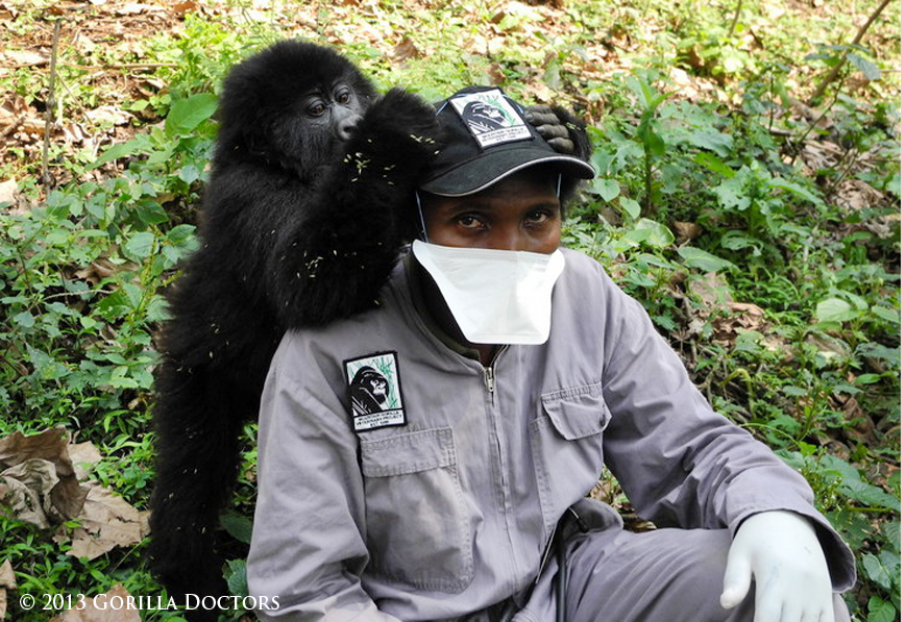
The Gorilla doctors are another example of a protective aid to protect gorillas. The Gorilla doctors work to minimise human contact with gorillas to protect them from harmful disease, taking preventative measures to reduce the risk of disease transmission and avoid changing or disturbing gorillas’ natural behaviour (12), a vital component in conserving the species and shielding them from disease.
Furthermore, initiatives such as the Modern Cooking for Healthy Forests (MCHF) a five-year activity funded by the United States Agency for International Development (USAID) and the United Kingdom Foreign, Commonwealth and Development Office (FCDO), are working in countries such as Malawi, to promote sustainable forest management and energy options to maintain forest cover (13). Initiatives such as this are prominent in protecting gorilla species.
Protected areas for gorillas also aim to prevent disturbances to gorillas’ natural behaviour but also protects their habitats, ensuring they can thrive without human interference. Whilst national parks are still threatened by illegal activity in the face of high demand for forest resources, measures have been taken to prevent this. Actions such as increased law enforcement, patrolling and surveillance networks, habitat management, local community engagement and promotion of eco-tourism are all supporting the restoration of the gorilla population.
An example, cited from the African Parks organisation, a non-profit conservation organisation taking on the responsibility for the long-term management of protected areas, in partnership with governments and local communities (14), suggests how effective practice can restore wildlife protection.
Odzala-Kokoua National Park, one of the oldest national parks in Africa, is located in the Republic of Congo. Through this protected area, African Parks has played a key role in revitalising the park and addressing long-standing challenges, such as limited resources (15).
To support effective park management and attract tourism that benefits the local community, African Parks has made significant investments in “education, healthcare, and infrastructure” (15). These efforts have helped generate revenue for surrounding communities, improving overall wellbeing and long-term impact to the people and the gorillas situated in that area.
By building strong partnerships with local residents, African Parks has fostered community buy-in for the long-term conservation of the park. This collaborative approach not only strengthens protection for gorilla populations but also encourages broader support for safeguarding protected areas across the region. By helping to bring jobs, schools, healthcare and revenue to the national parks (15), this discourages negative implications to the wildlife as the wildlife is a beneficiary for NGO engagement, tourism and revenue for the area, this therefore creates a sense of community engagement in protecting the wildlife rather than becoming a threat to it.
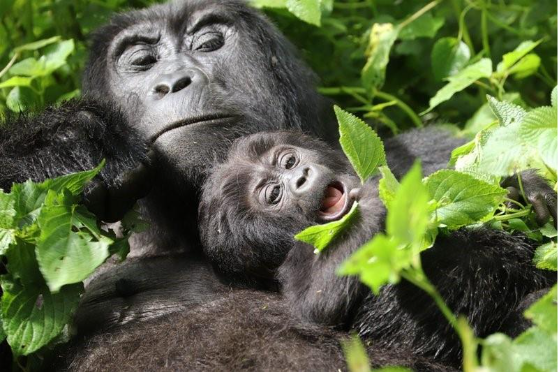
This links to the practice of Sustainable tourism also known as eco-tourism as an important concept to build upon for the protection of gorillas. Countries in equatorial Africa such as Uganda, are a tourist hotspot for visiting gorillas.
In the year 2024, Uganda’s Tourism Sector hits the record high of US$1.28 Billion (16). This was largely due to Uganda’s unique natural attractions, including the gorillas. Whilst tourism can be a threat to gorilla populations, sustainable tourism has been a high priority within the Ministry of Tourism, Wildlife and Antiquities aiming to advance wildlife conservation (16), it is clearly on the agenda for national parks such as Bwindi National Park, to account sustainable tourism as one of their highest priorities.
At Bwindi National Park, minimising environmental impact is a key factor in ‘adhering to sustainable practices’ (17), which can preserve the environment for future generations. The park advocates for all waste to be properly disposed of and removed from the forest to be ‘fostering a culture of collective responsibility.’ Visitors are also expected to maintain safe distances from gorillas and stick to designated trails (17).
In addition, the park encourages eco-conscious behaviour to avoid disrupting animal habitats (17), and to minimise damage to the natural environment.
How can eCooking conserve gorillas and their habitats?
While protective practices play an important role in conserving gorilla populations, underlying challenges are posing extended risk to the vitality of gorillas. To truly safeguard gorillas and reduce human-wildlife conflict as well as habitat destruction, it’s essential to address the root issues. One of those root issues being: traditional cooking practices. Tackling this systemic problem is key to ensuring long-term conservation success.
As we know charcoal, firewood and biomass are cooking fuels for people situated in parts of equatorial Africa who don’t have access to electricity, however this is not a sustainable solution to neither the wildlife nor the people.
With the run-up to COP30 it is immensely clear that electric cooking is emerging as a viable solution and a sustainable alternative to traditional cooking methods. By reducing reliance on cooking fuels, electric cooking helps phase out pressure on forest resources, ultimately protecting gorillas and their habitats.
With GeCCo as part of Advisory Group 3: Ensuring Universal Access to Energy, electric cooking has become an integral part in working towards closing the energy access gap.
Electric cooking is the future of global cooking practices. It’s a climate solution, a development solution. In the process of alleviating poverty in regions across the Global South, one co-benefit could be the preservation of gorillas.
- Electric cooking eliminates the need to cut firewood or search for traditional fuels, as it runs entirely on electricity. This helps preserve forests—protecting vital ecosystems and the habitats of endangered species like gorillas.
- Electric cooking reduces human-wildlife conflict, limiting the disturbance of gorillas and risk of disease transmission, habitat degradation and associated tensions.
- Electric cooking leverages nature credits through the mechanism of carbon financing. Carbon financing turns ecosystem protection into tradable credits. Electric cooking supports this by reducing deforestation, helping preserve carbon sinks and boosting the value of nature-based carbon credits.
- Electric cooking also supports the promotion of eco-tourism, a concept that depends on healthy habitats. By reducing deforestation, electric cooking helps protect gorilla forests—keeping wildlife visible and ecosystems protected for sustainable tourism.
- Electric cooking works towards climate goals reducing greenhouse gas emissions and reducing air pollution risk, benefiting both human health and gorillas living near forest-edge communities.
- An additional supporting argument is that electric cooking can reduce the damaging effects of black carbon, as outlined in the MECS blog by Leach, M. and Bricknell, M., electric cooking can reduce black carbon—a potent climate pollutant—which helps slow atmospheric warming. This, in turn, can indirectly support gorilla conservation by protecting their forest habitats from climate-driven degradation (18).
Electric cooking amplifies wins: it protects gorillas, empowers communities, supports governments and advances climate action, it is a win for wildlife, for users, for governments and for the planet.
In this way, gorillas can benefit from the effects of electric cooking relieving a factor of pressure from their habitat destruction, deforestation and disturbance to their environment.
Conclusion
In conclusion, electric cooking is a pathway forwards in protecting gorillas and their habitats, it’s an opportunity to redirect the destruction to rehabilitation. Gorillas face wide-ranging impacts at present and as affirmed in this blog – traditional cooking practices heavily influence gorilla population decline. The impact of traditional cooking methods not only destroys gorilla habitats but also exposes gorillas to other threats including human-wildlife conflict, disruption to their natural cycles, imbalance to their social structures, inadequate access to their food resources etc.
With one impact comes another and addressing root issues that are fragmenting the gorilla species is key in building the species back. As discussed, electric cooking optimises electricity as a cooking fuel of choice, which deters destruction to forests and in turn, safeguards gorillas’ habitats and their natural environments. It is a key component in addressing the root problem of traditional cooking methods and becoming a dual mechanism in the energy access transition, helping people foster an alternative cooking practice that can safeguard their families and the environment that surrounds them. Therefore, by embracing electric cooking, we can strengthen the safeguarding of gorillas. Safeguarding this unique species in turn, can mean enhanced benefit of nature credits in carbon financing, and it can support livelihoods dependent on eco-tourism.
Bibliography:
1)Ghosh, P. (2012) Gorilla genome could hold key to the human condition, BBC News. Available at: https://www.bbc.co.uk/news/science-environment17239059#:~:text=Initial%20comparisons%20confirm%20that%20chimpanzees,to%20leave%20gorillas%20completely%20unaffected (Accessed: 2 October 2025).
2) WWF, (2022) Eight species making a comeback, Available at: https://www.worldwildlife.org/stories/eight-species-making-a-comeback#:~:text=Mountain%20gorillas%20in%20Uganda%20and,an%20estimated%20400%20in%202011 (Accessed: 7 October 2025).
3) WWF, (2025), Species List | Endangered, Vulnerable, and Threatened Animals ), Available at: https://www.worldwildlife.org/species/directory?direction=desc&sort=extinction_status (Accessed: 2 October 2025).
4) Levy, A. (2025) The Precarious Existence of Critically Endangered Gorillas, Earth.org. Available at: https://earth.org/the-precarious-existence-of-critically-endangered-gorillas/ (Accessed: 2 October 2025).
5) Wisdom Akpalu, Dasmani, I. and Aglobitse, P.B. (2011) ‘Demand for cooking fuels in a developing country: To what extent do taste and preferences matter?’, Energy Policy, 39(10), pp. 6525–6531. Available at: https://doi.org/10.1016/j.enpol.2011.07.054
6) Cvijetič, S., Pattie, D., Smitall, M., Meneghetti, F., Kopolo, G., Candelori, M., 2004. The United Nations Convention to Combat Desertification (UNCCD): a carrying pillar in the global combat against land degradation and food insecurity. Background Paper for the San Rossore Meeting Climate Change: A New Global Vision. Pha. Italy, 15-16 July 2004.
7) WWF, 2016, Mountain Gorilla | Gorillas |, ‘Charcoal Making’ Available at: https://www.worldwildlife.org/species/mountain-gorilla#:~:text=Charcoal%20Making,snares%20set%20for%20other%20animals. (Accessed: 2 October 2025).
8) Toto, E and Guyese, T, (2024) DRC’s reliance on charcoal threatens forests and fuels armed conflict, Mongabay Environmental News. Available at: https://news.mongabay.com/2024/12/drcs-reliance-on-charcoal-threatens-forests-and-fuels-armed-conflict/ (Accessed: 17 October 2025).
9) Mission300: Africa Energy Summit, (2025) ,Democratic Republic of the Congo – National Energy Compact Cohort 1 Available at: https://mission300africa.org/energysummit/compacts_files/democratic-republic-of-the-congo-national-energy-compact/ (Accessed: 17 October 2025).
10) Mbuga, S., and Erickson-Davis, M. (2016) A dangerous, illegal necessity: charcoal reform comes to Virunga, Mongabay Environmental News. Available at: https://news.mongabay.com/2016/08/a-dangerous-illegal-necessity-charcoal-reform-comes-to-virunga/ (Accessed: 7 October 2025).
11) The Gorilla Organisation,(2023), ‘The Gorilla Habitat’, Available at: https://gorillas.org/about-gorillas/gorilla-habitat/ (Accessed: 2 October 2025).
12) The Gorilla Doctors (2012), Top 10 Ways to Protect Mountain Gorillas – Gorilla Doctors, Available at: https://www.gorilladoctors.org/top-10-ways-to-protect-mountain-gorillas/#:~:text=To%20protect%20gorillas%20from%20such,the%20gorillas%20at%20all%20times. (Accessed: 3 October 2025).
13) BRACC (Building Resilience and Adapting to Climate Change), (2021), Modern Cooking for Healthy Forests, Available at: https://bracc.kulima.com/project/modern-cooking-healthy-forests.html (Accessed: 21 October 2025).
14) African Parks, (2025), ‘Our Story’, Africanparks.org. Available at: https://www.africanparks.org/about-us/our-story (Accessed: 17 October 2025).
15) African Parks,(2020), How We’re Saving the Gorillas ‘Creating safe havens’, Africanparks.org, Available at: https://www.africanparks.org/save-gorillas, (Accessed: 17 October 2025).
16) MTWA tourism (2025) UGANDA’S TOURISM SECTOR HITS RECORD HIGH OF US$1.28 BILLION IN 2024, Tourism Uganda. Available at: https://www.tourism.go.ug/single-post/uganda-s-tourism-sector-hits-record-high-of-us-1-28-billion-in-2024 (Accessed: 16 October 2025).
17) Bwindi Impenetrable National Park (2017), Responsible Travel | Tours, Activities & Experiences. Available at: https://www.bwindiimpenetrablenationalpark.com/responsible-travel/#:~:text=More%20Tips,Trekking:%20Do’s%20and%20Don’ts (Accessed: 17 October 2025).
18)Prof. Leach, M., Bricknell, M., Why Black Carbon Isn’t Just Another ‘CO2 Equivalent’ – Modern Energy Cooking Services (2025) Modern Energy Cooking Services. Available at: https://mecs.org.uk/blog/why-black-carbon-isnt-just-another-co%E2%82%82-equivalent/ (Accessed: 17 October 2025).